The AAFCO Statement
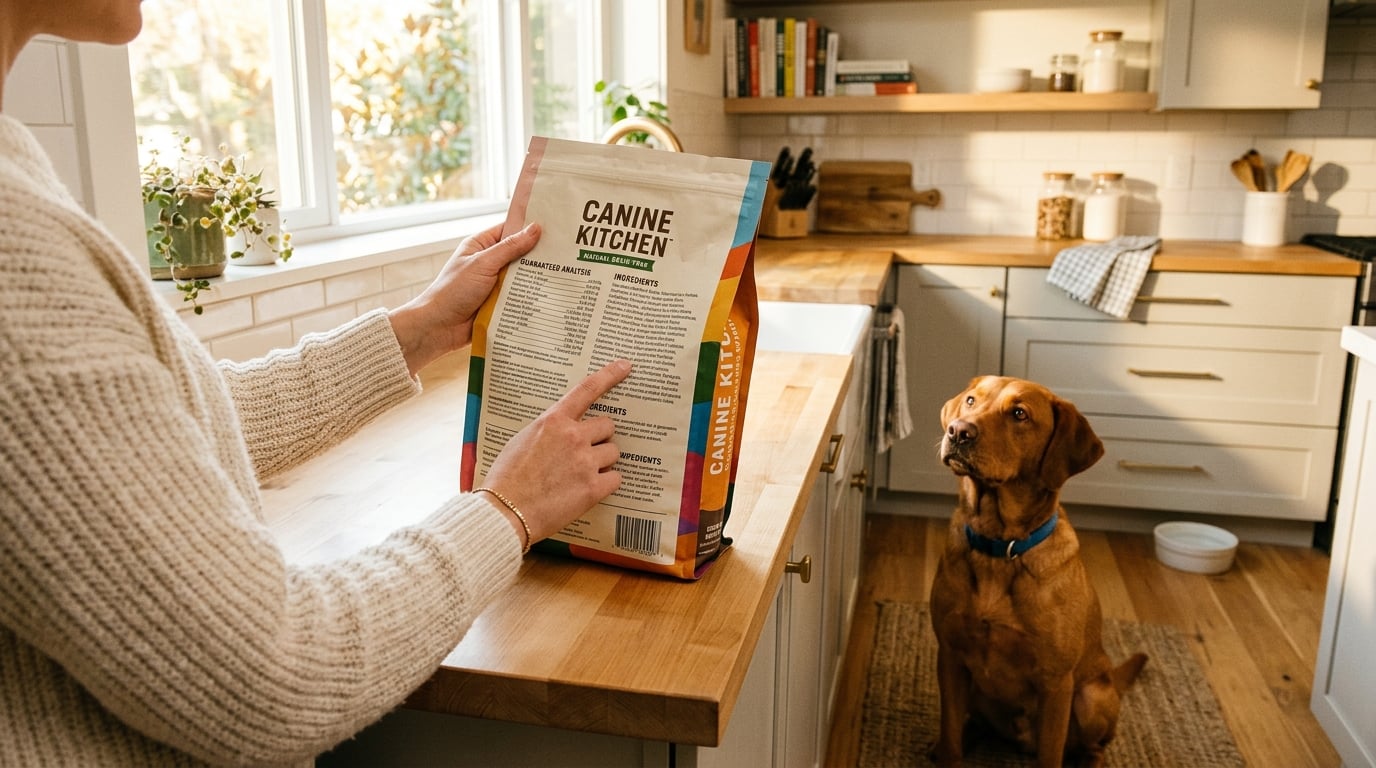
The most important thing on any dog food label is the AAFCO nutritional adequacy statement. It tells you whether the food is "complete and balanced" for a specific life stage and whether this was determined by formulation or feeding trials. Feeding trials are considered a higher standard than formulation alone.
Understanding the Ingredient List
Ingredients are listed by weight before processing. A named meat (chicken, beef) as the first ingredient sounds great, but meat is 70% water. After cooking, that meat may represent much less of the final product. Meat meals (chicken meal, fish meal) are already dehydrated, so their position in the list better represents their actual contribution.
Guaranteed Analysis: What the Numbers Mean
The guaranteed analysis shows minimum crude protein, minimum crude fat, maximum crude fiber, and maximum moisture. To compare dry and wet foods fairly, convert to a dry matter basis by removing moisture from the calculation. A wet food with 10% protein and 78% moisture actually has about 45% protein on a dry matter basis.
Marketing Terms to Ignore
"Premium," "gourmet," "natural," "holistic," and "human-grade" have no regulated definitions in pet food. "Grain-free" is not inherently better and has been linked to dilated cardiomyopathy in some breeds. Focus on the AAFCO statement, the ingredient list, and your dog's actual health rather than marketing language.
Sources & References
Happy Waggie Tails Editorial Team
Certified Pet Care Writers & Canine Health Specialists
The Happy Waggie Tails editorial team comprises experienced pet care writers and certified canine professionals who collaborate with licensed veterinarians to deliver accurate, practical, and compassionate dog care content for every life stage.
This article is part of our
Nutrition Guide