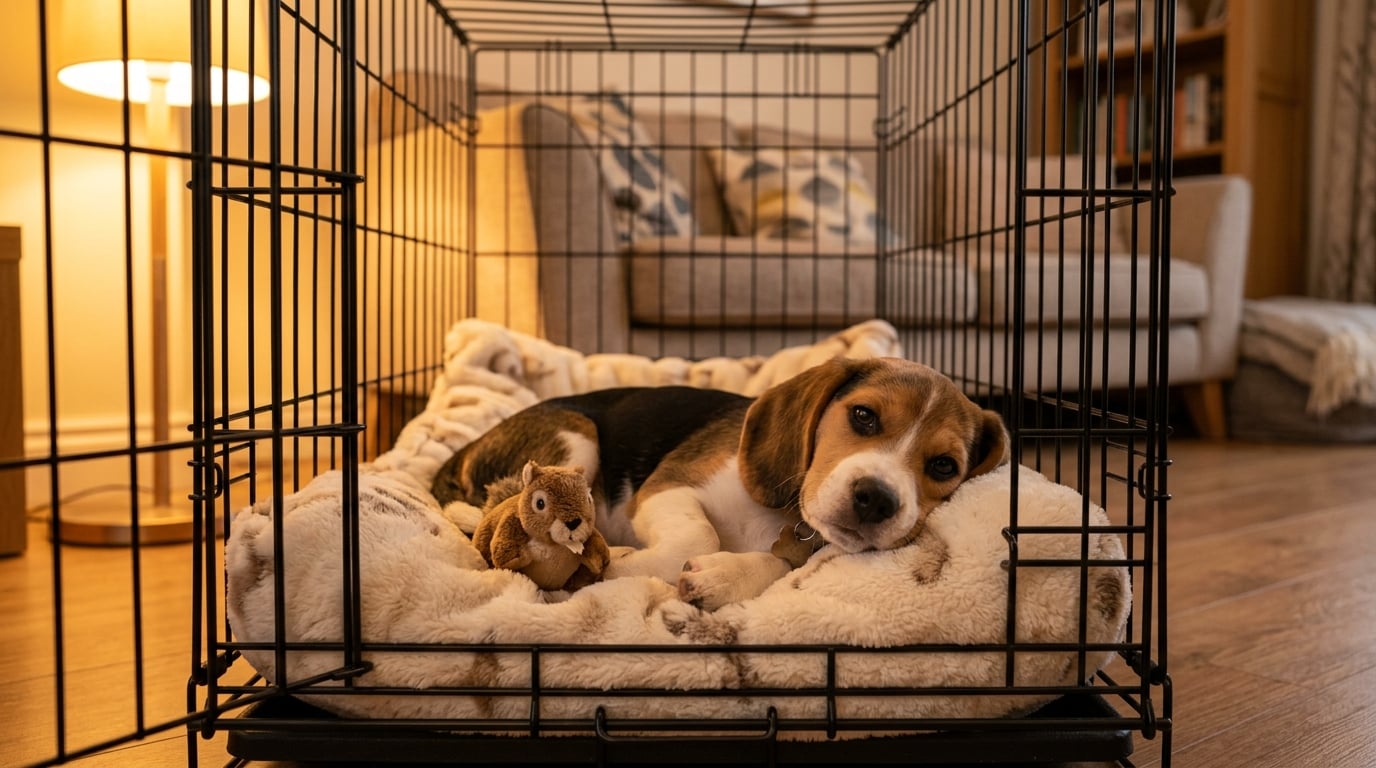
Why Crate Training Works
Dogs are naturally den animals. A properly introduced crate becomes a place of security and calm. It helps with house training because puppies instinctively avoid soiling their sleeping area. It keeps your puppy safe when you cannot supervise and provides a quiet retreat during stressful situations.
Choosing the Right Crate
The crate should be large enough for your puppy to stand, turn around, and lie down, but not so large they can use one end as a bathroom. Many crates come with dividers so you can adjust the size as your puppy grows. Wire crates offer good ventilation, while plastic crates feel more enclosed and den-like.
The Introduction Process
Never force your puppy into the crate. Start by placing treats and a soft blanket inside with the door open. Feed meals in the crate. Once your puppy enters willingly, close the door for a few seconds, then gradually increase the time. Stay nearby at first so your puppy does not feel abandoned.
Building Duration
Increase crate time slowly over days and weeks. A good rule is no more than one hour per month of age, plus one hour (so a 3-month-old puppy should not be crated more than 4 hours). Always take your puppy outside immediately after crate time.
Common Crate Training Mistakes
Never use the crate as punishment. Do not leave your puppy crated for too long. Ignore whining that is not urgent (wait for a brief pause of quiet before opening the door). And do not rush the process — a few extra days of patient introduction prevents weeks of resistance later.
Sources & References
Happy Waggie Tails Editorial Team
Certified Pet Care Writers & Canine Health Specialists
The Happy Waggie Tails editorial team comprises experienced pet care writers and certified canine professionals who collaborate with licensed veterinarians to deliver accurate, practical, and compassionate dog care content for every life stage.
This article is part of our
Puppy Care Guide