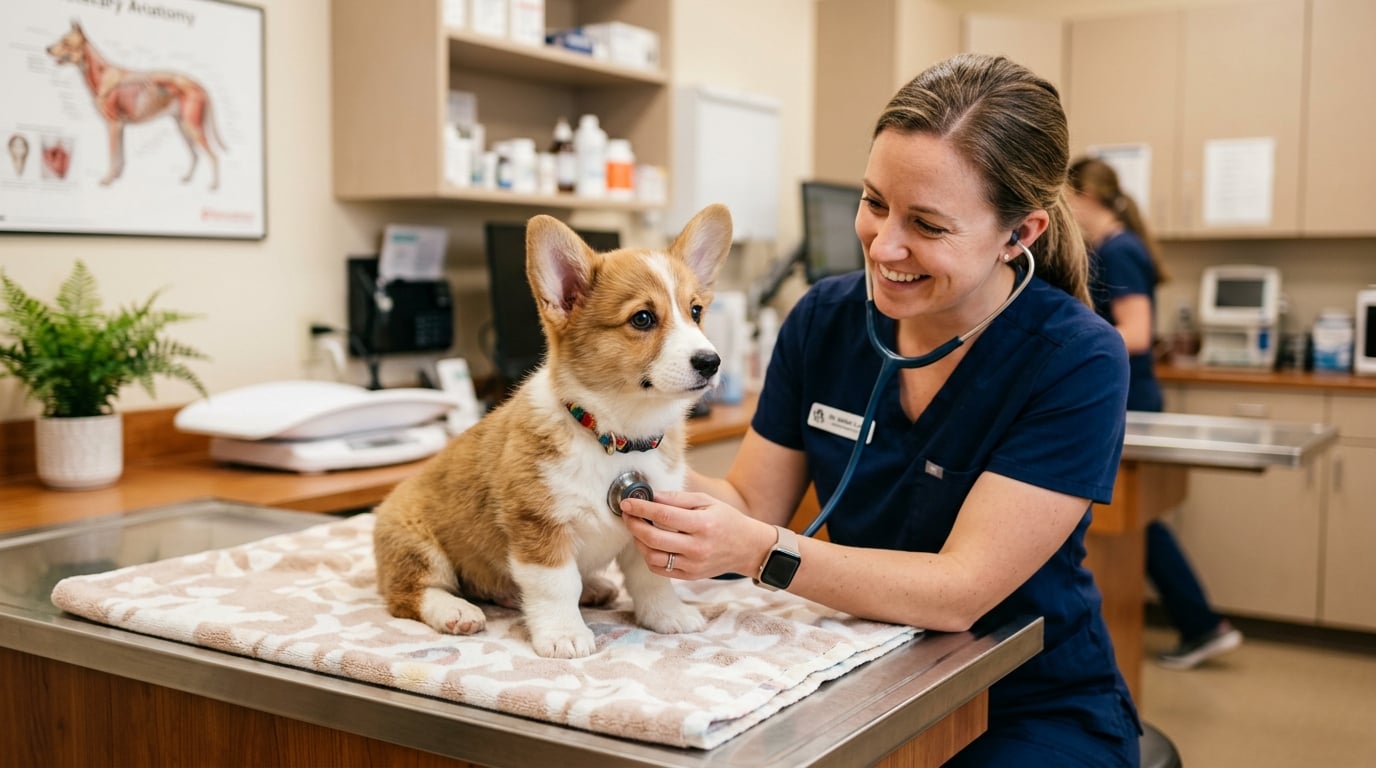
When to Schedule
Ideally, your puppy's first vet visit should happen within the first week of bringing them home, usually between 6 and 8 weeks of age. If the breeder or rescue provided initial vaccines, bring those records. Your vet will review what has been done and create a vaccination schedule for the remaining doses.
What Happens During the Exam
The vet will check your puppy's weight, heart, lungs, eyes, ears, mouth, skin, and abdomen. They will look for congenital issues, hernias, and parasites. A fecal sample may be tested for worms. Depending on age and history, your puppy may receive their first or second set of core vaccinations.
Questions to Ask Your Vet
What food and portion size do you recommend? When should my puppy start heartworm and flea prevention? What is the vaccination schedule? When should we discuss spaying or neutering? Are there any breed-specific health concerns I should watch for? A good vet will welcome all of these questions.
Making It Positive
Bring high-value treats and let your puppy explore the waiting room calmly. Ask the vet and staff to offer treats during the exam. Positive first experiences at the vet reduce fear and make future visits much easier for everyone. Avoid comforting anxious behavior, which can reinforce it.
After the Visit
Your puppy may be slightly tired or sore at the injection site. This is normal. Keep them calm and monitor for any unusual reactions over the next 24 hours. Mark your calendar for the next appointment, which is usually 3 to 4 weeks later for the next round of vaccines.
Sources & References
Happy Waggie Tails Editorial Team
Certified Pet Care Writers & Canine Health Specialists
The Happy Waggie Tails editorial team comprises experienced pet care writers and certified canine professionals who collaborate with licensed veterinarians to deliver accurate, practical, and compassionate dog care content for every life stage.
This article is part of our
Puppy Care Guide