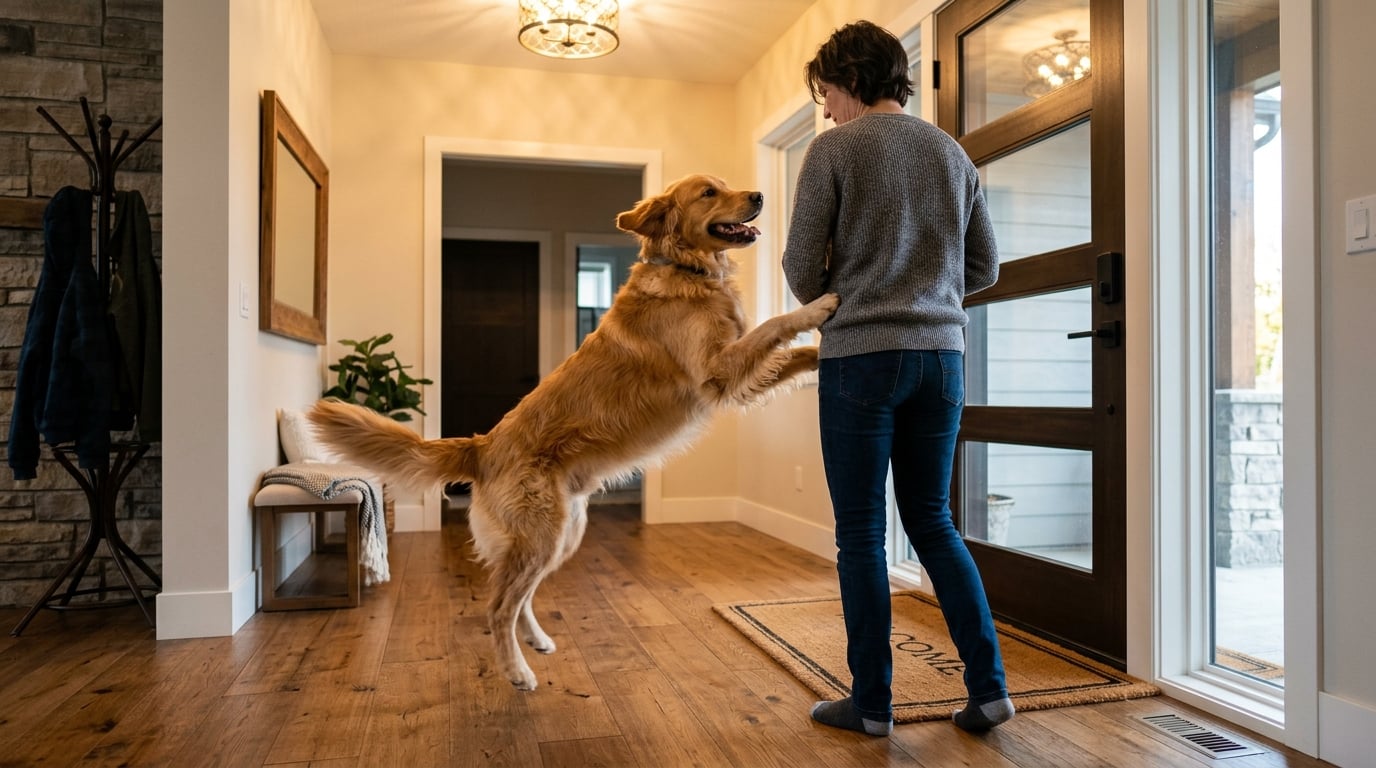
Why Dogs Jump
Jumping is a natural greeting behavior. Puppies lick their mother's face to solicit food and attention, and adult dogs greet each other nose-to-nose. When your dog jumps on you, they are trying to reach your face to say hello. The problem is not the intention — it is that 60 pounds of excited dog hitting a guest at the front door is unsafe and unwelcome. The good news: jumping is one of the easier behaviors to change because dogs do it to get attention, and attention is something you completely control.
The Core Principle: Reward What You Want
Most people try to stop jumping by pushing the dog down, saying "off," or kneeing the dog in the chest. All of these involve touching and talking to the dog, which is exactly the attention the dog wanted. Even negative attention is still attention. Instead, the strategy is simple: remove all attention when the dog jumps, and deliver attention the instant all four paws are on the floor.
Struggling with other behavior challenges? Join our free newsletter for weekly training tips from certified professionals.
Step 1: Practice at Home First
Stand in your living room with treats in your pocket. When your dog approaches calmly with four paws down, say "yes" and reward. If your dog jumps, immediately turn your back and cross your arms. Do not speak, do not make eye contact. The moment your dog puts all four feet down, turn back and reward. Repeat this 10 to 15 times in a session. Most dogs figure out the pattern within one or two sessions.
Step 2: Add the Door Trigger
Doors are the biggest jumping trigger. Practice coming through your front door while your dog is leashed inside with a family member holding the leash. If your dog jumps, step back outside and close the door. Wait 5 seconds, then try again. Only enter and greet your dog when all four paws stay on the floor. This may take 10 or more repetitions the first day. Be patient — consistency here pays off fast.
Step 3: Teach an Incompatible Behavior
A dog who is sitting cannot also be jumping. Teach a solid sit-to-greet. Ask your dog to sit before any attention, food, leash clipping, or door opening. When guests arrive, cue your dog to sit and have the guest approach only while the sit holds. If the dog breaks the sit, the guest turns away. This gives your dog a clear job that earns them exactly what they want: attention.
Managing Guests During Training
While you are still training, management prevents setbacks. Keep your dog on a leash when guests arrive. Use a baby gate to create space. Ask guests to ignore your dog until they are calm. It is better to manage the environment than to let your dog practice jumping 20 times while you are still teaching the alternative behavior.
Common Mistakes to Avoid
Inconsistency is the number one reason jumping does not improve. If you ignore jumping but your partner pets the dog when it jumps, you have taught your dog to keep trying. Everyone in the household must follow the same rules. Also, do not punish after the fact — if you were not there to redirect the behavior in real time, it is a management failure, not a training opportunity.
Sources & References
Happy Waggie Tails Editorial Team
Certified Pet Care Writers & Canine Health Specialists
The Happy Waggie Tails editorial team comprises experienced pet care writers and certified canine professionals who collaborate with licensed veterinarians to deliver accurate, practical, and compassionate dog care content for every life stage.
This article is part of our
Training Guide