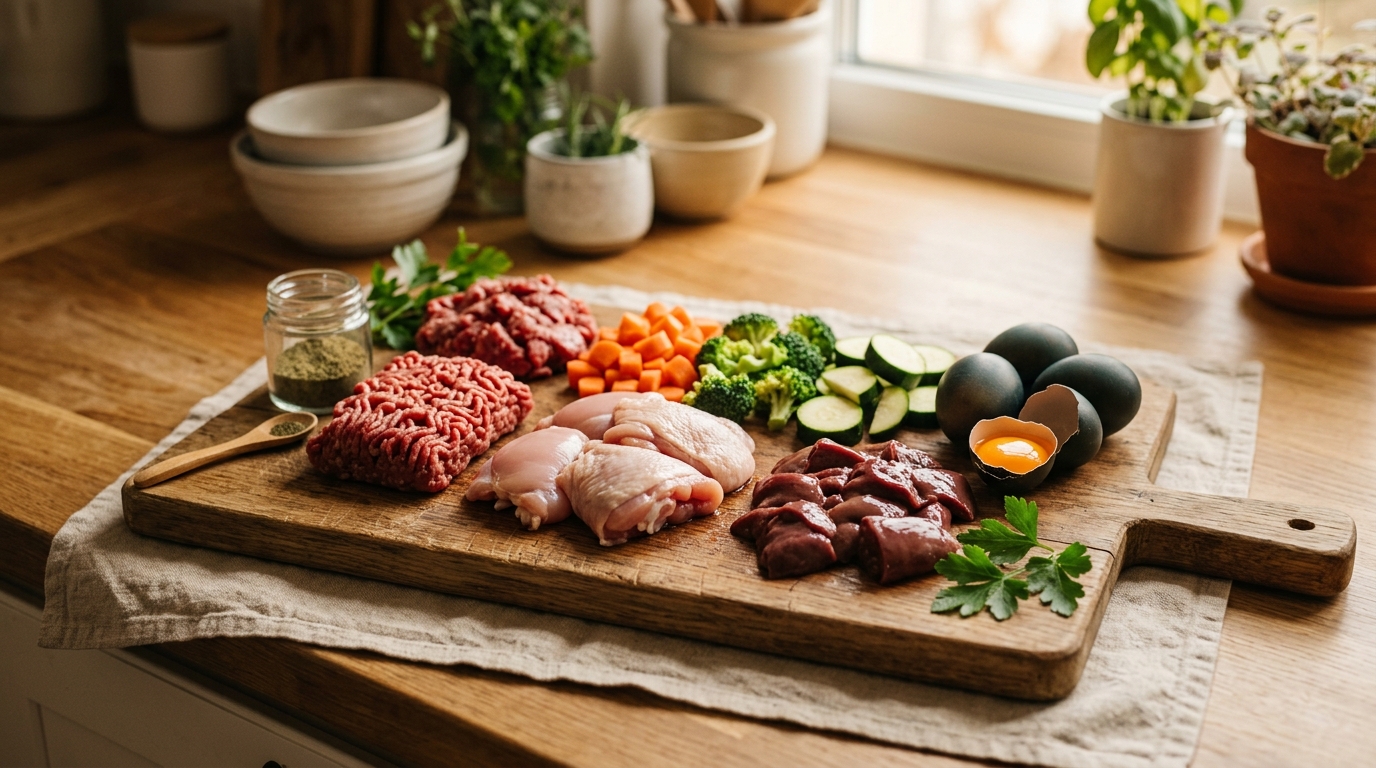
What Is a Raw Diet
A raw food diet typically consists of raw muscle meat, raw meaty bones, organ meats, vegetables, and sometimes dairy or eggs. The concept is based on the idea that dogs evolved to eat raw prey and that commercial processing destroys nutrients. Raw diets can be homemade or purchased as commercially prepared frozen or freeze-dried meals.
Potential Benefits
Advocates report shinier coats, healthier skin, cleaner teeth, higher energy levels, and smaller stools. Some dogs with chronic skin or digestive issues improve on raw diets, possibly because they eliminate common kibble ingredients like grains or specific proteins that trigger sensitivities.
Real Risks to Consider
Raw diets carry bacterial contamination risks including Salmonella and Listeria, which can affect both dogs and their human families. Nutritional imbalances are common in homemade raw diets without professional formulation. Raw bones can crack teeth or cause intestinal blockages. The FDA and most veterinary organizations advise against raw feeding.
If You Choose to Feed Raw
Work with a board-certified veterinary nutritionist to formulate a balanced recipe. Use human-grade meat from reputable sources. Follow strict food safety protocols: dedicated cutting boards, immediate cleanup, and separate storage. Have your dog's bloodwork checked regularly to catch nutritional deficiencies early.
Sources & References
Happy Waggie Tails Editorial Team
Certified Pet Care Writers & Canine Health Specialists
The Happy Waggie Tails editorial team comprises experienced pet care writers and certified canine professionals who collaborate with licensed veterinarians to deliver accurate, practical, and compassionate dog care content for every life stage.
This article is part of our
Nutrition Guide