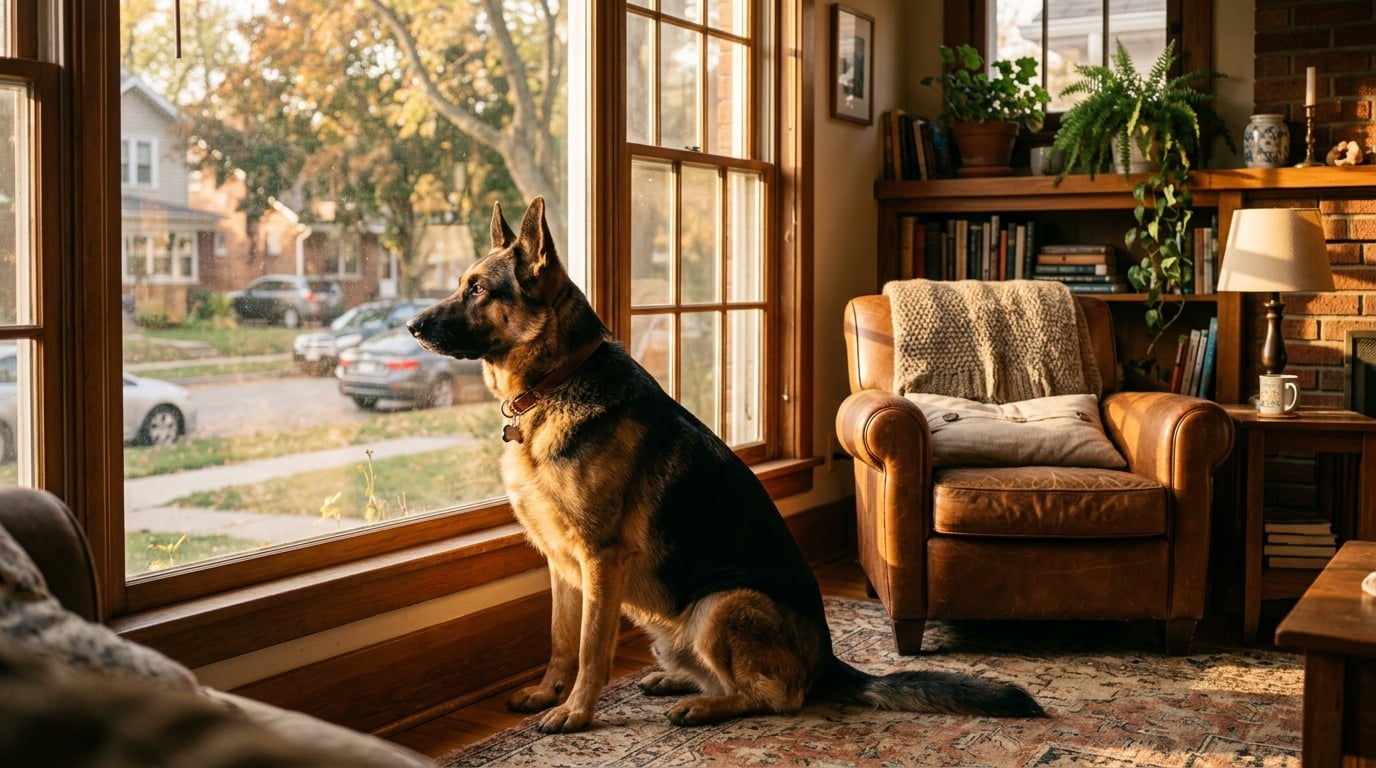
What Separation Anxiety Actually Looks Like
True separation anxiety goes beyond boredom. Dogs with this condition may destroy door frames, windows, or crates trying to escape. They may vocalize nonstop, pace, drool excessively, or have house training accidents only when alone. These behaviors typically start within minutes of their owner leaving.
Why It Develops
Separation anxiety can develop after a change in routine, a move, the loss of a family member, or time in a shelter. Some dogs are genetically predisposed. It is more common in dogs who were adopted from shelters and dogs who were never taught to be alone during puppyhood.
Desensitization: The Core Strategy
The goal is to teach your dog that your departures predict good things and that you always come back. Start by leaving for just seconds, then gradually increase duration. Do not make a big deal of arrivals or departures. Give a special long-lasting chew only when you leave, and pick it up when you return.
When to Seek Professional Help
If your dog injures themselves trying to escape, has severe panic symptoms, or desensitization alone is not making progress within a few weeks, consult a veterinary behaviorist. Medication can be an important bridge while your dog learns new coping skills. This is not a failure — it is appropriate care.
Sources & References
Happy Waggie Tails Editorial Team
Certified Pet Care Writers & Canine Health Specialists
The Happy Waggie Tails editorial team comprises experienced pet care writers and certified canine professionals who collaborate with licensed veterinarians to deliver accurate, practical, and compassionate dog care content for every life stage.
This article is part of our
Adult Dog Care Guide