The Scope of the Problem
By age 3, most dogs have some degree of periodontal disease. It starts with plaque, progresses to tartar, then to gingivitis and eventually bone loss. Bacteria from dental disease can enter the bloodstream and affect the heart, kidneys, and liver. Yet dental care remains one of the most overlooked aspects of dog health.
Brushing Your Dog's Teeth
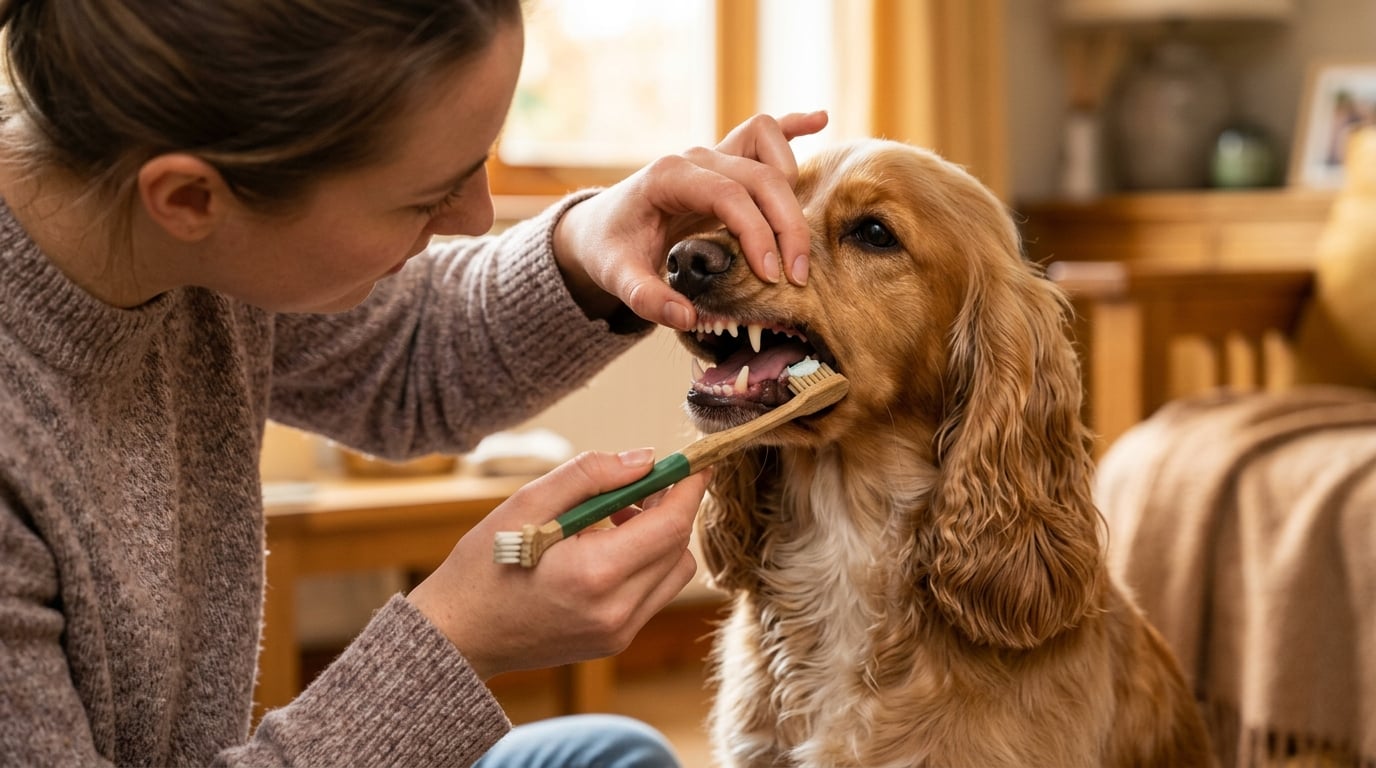
Daily brushing is the gold standard. Use a dog-specific toothbrush (or a finger brush) and enzymatic dog toothpaste. Never use human toothpaste — fluoride and xylitol are toxic to dogs. Start slowly: let your dog lick the toothpaste, then progress to rubbing gums, then to short brushing sessions.
Professional Cleanings
Even with regular brushing, most dogs benefit from professional dental cleanings. These require anesthesia, which allows your vet to clean below the gum line, take dental x-rays, and address any problems. The frequency depends on your dog's individual needs, but annually is a good starting point.
Signs of Dental Problems
Bad breath, drooling, pawing at the mouth, difficulty eating, loose teeth, bleeding gums, and facial swelling are all signs of dental disease. Dogs are remarkably good at hiding oral pain, so regular inspections are important even when they seem to be eating normally.
Sources & References
Happy Waggie Tails Editorial Team
Certified Pet Care Writers & Canine Health Specialists
The Happy Waggie Tails editorial team comprises experienced pet care writers and certified canine professionals who collaborate with licensed veterinarians to deliver accurate, practical, and compassionate dog care content for every life stage.
This article is part of our
Health & Wellness Guide