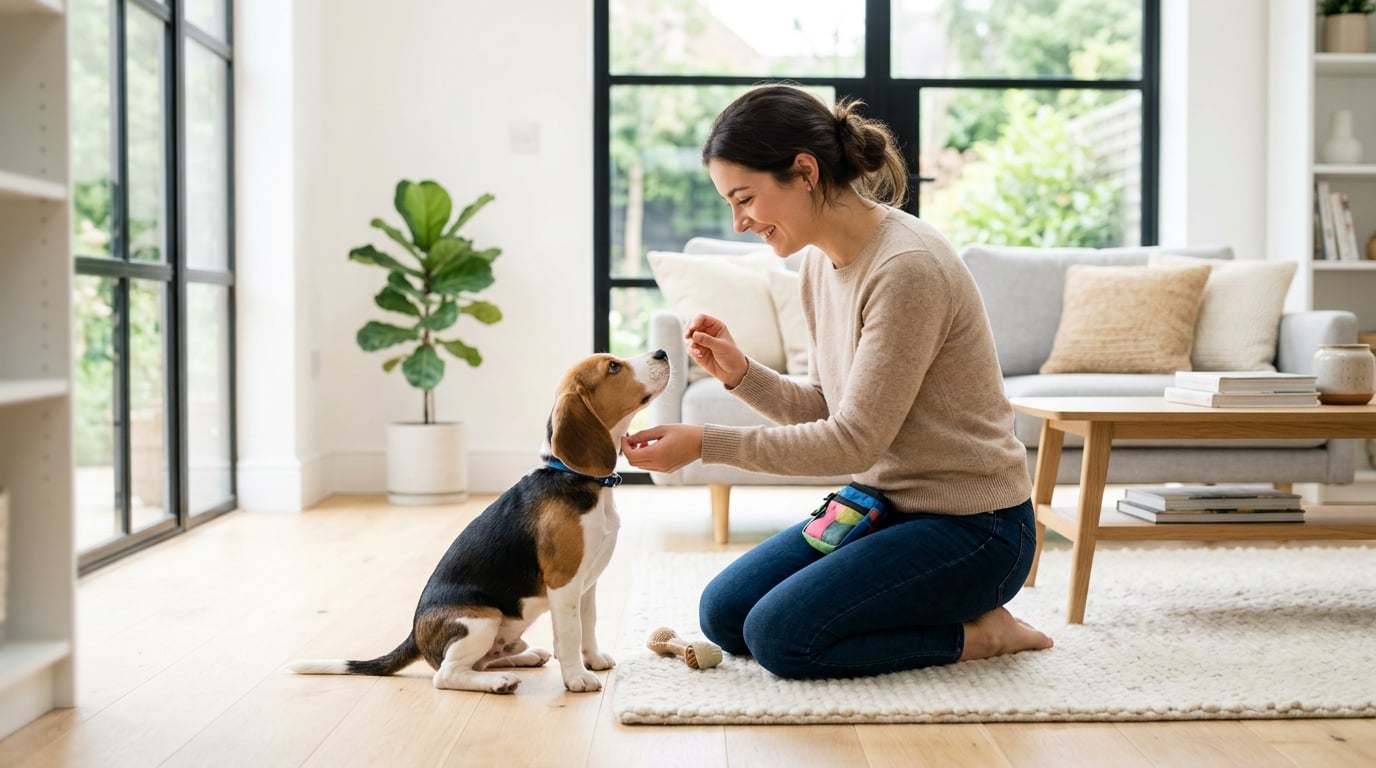
Why Positive Reinforcement Is the Standard
Animal behavior science consistently shows that rewarding desired behavior is more effective than punishing unwanted behavior. Dogs trained with positive reinforcement learn faster, retain skills longer, and show fewer stress signals during training. It also builds trust between you and your dog.
How It Works
Mark the exact moment your dog does what you want with a verbal marker ("yes!") or a clicker, then deliver a reward within 1 to 2 seconds. The reward can be a treat, toy, or praise. The timing is critical — late rewards confuse dogs about what they did right. Start with high-value rewards and gradually reduce frequency as the behavior becomes reliable.
Setting Up for Success
Train in a quiet environment first, then gradually add distractions. Keep sessions short (3 to 5 minutes for puppies, 10 to 15 for adults). End on a success, even if that means asking for something easy. Train before meals when your dog is motivated by food.
The Foundation Behaviors
Focus on these five behaviors first: attention (looking at you when you say their name), sit, down, stay, and come. These provide the framework for everything else. Each skill builds on the previous one. A dog who can maintain eye contact is ready to learn sit. A dog who can sit is ready to learn stay.
Sources & References
Happy Waggie Tails Editorial Team
Certified Pet Care Writers & Canine Health Specialists
The Happy Waggie Tails editorial team comprises experienced pet care writers and certified canine professionals who collaborate with licensed veterinarians to deliver accurate, practical, and compassionate dog care content for every life stage.
This article is part of our
Training Guide